Two Years and Counting | Post-chemo Pixie Grow Out

pixie grow out run lipstick chemo

We all have dates that we remember.  Some very important, some rather mundane.  I could never remember dates for history class.  But I’ve got a slew of dates floating around in my head.  March 8– my first date with Clay.  May 1– the day I had to finally send in the acceptance to the University of Illinois (it was not my first choice for college, but I couldn’t get the scholarship support to go elsewhere.) July 18– my first best friend’s birthday, and we haven’t lived in the same town since first grade.  October 5– the day I found out I had breast cancer.  February 1– my last day of chemo.

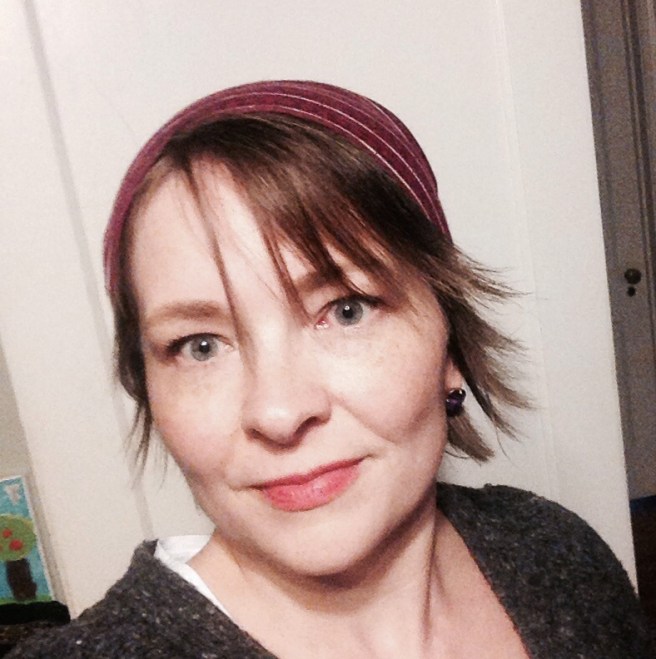
Wow, that was a lot of writing to get to the “it’s been two years since my last day of chemo” line.  But, there you have it.  Two years from completely bald to Rapunzel-like hair.  I was shocked last week when someone compared my hair to Rapunzel’s– I was thinking of the long blond braid that reached to the base of the tower.  Apparently in Tangled, her hair is cut at the end of the movie, and as it turns out, my newest style looks very much like hers.  (Like how I tried for a concerned, wide-eyed stare just like hers?)  And here, I thought growing out my hair would take forever.  All I needed was two years to get hair just like Rapunzel’s.

On Being Med-Free | Tamoxifen and Long Term Breast Cancer Treatment

run lipstick chemo tamoxifen breast cancer

Forgive the old picture, but I don’t have any current pics of my meds.  Because I don’t have any meds.  Which is sort of a blessing and a curse.  It’s great that I don’t have to remember to fill a prescription and remember to take a daily pill.  It’s really great that I don’t have to deal with side effects.  What’s not so great, you may be wondering? I’m not actively doing anything to help prevent a recurrence.  If you know someone who’s had breast cancer and finished her treatment, odds are good that she’s taking a pill every day for the next five or ten years, and so it’s an obvious question to wonder why I’m not.

And this is where we go back to the science.  Remember when I explained about how my breast cancer is called triple negative? (Yep, if you look at that post, I used the same picture! Sorry!) Pathologists look at three main receptors when classifying breast tumors: ER, PR, and HER2.  Since my tumor didn’t have any of the three, I am considered “triple negative.” Tumors that express ER or PR are considered hormone responsive, and they make up 60-70% of newly diagnosed breast cancer cases.  These tumors use estrogen to grow, which means that shutting down their ability to use estrogen can shut down tumor growth.  No tumor growth means your tumor won’t kill you.  Obviously, hormone-targeted therapies have made a significant impact in the management of hormone responsive tumors.  There are several ways to manage hormone responsive tumors long term.  Tamoxifen is the most commonly known, and it acts as an anti-estrogen in the breast and effectively shuts down estrogen signalling.  Other drugs (raloxifene, toremifene, and fulvestrant) work in a similar manner.  Aromatase inhibitors halt the production of estrogen (letrozole, anastrazole, and exemestane) and can also be used to starve the tumor of estrogen.  (Fun fact– a woman’s body uses testosterone to make estrogen using an enzyme called an aromatase, so aromatase inhibitors prevent that conversion).  In premenopausal women, ovarian ablation (with drugs like gosserelin or leuprolide) can be used in conjunction with aromatase inhibitors, and have recently been shown to be very effective.  These treatment regimens are long term– five years used to be the standard, now some studies indicate ten years is even better– and are not always tolerated well.  Like any treatment, some women don’t have many side effects, but for some women, the treatment causes significant quality of life issues leading them to choose to stop treatment.  (This is certainly not a decision to be made without talking to your doctor! I’m just saying that it happens, good or bad…) Most women deal with some side effects that fall into the undesirable category, but are considered a reasonable trade off for the reduction in risk of recurrence.

All of that is to say that at least 60-70% of women treated for breast cancer benefit from long term hormonal treatment.  But for those of us without hormone responsive tumors, there is no reason to take the meds.  Our tumors don’t use the estrogen, so blocking it won’t help us.  And herein lies the blessing and the curse.  I don’t have to take daily meds and deal with the side effects, which is awesome.  But I’m also left in the position where there is no medication that I can take that will reduce my risk of recurrence, and that’s a little less awesome.  I’m just going to count on the fact that the chemo did its job and keep running, running, running.  (I do wish it would warm up, though.  It’s a little cold and icy to enjoy running right now!) I can’t take tamoxifen to help me, but exercise has been shown to reduce recurrence risk.  And so I will run.  As one triple-negative friend put it: “Running is my tamoxifen.”

For a more complete discussion on hormonal therapy for breast cancer, check out what this fact sheet from NCI (National Cancer Institute).  It’s complete and not overly technical.

The Great Pixie Grow Out Continues… | Hair Growth After Chemo

post chemo pixie grow out run lipstick chemo

At this point in the great pixie grow out, my hair pretty much looks different every day.  This afternoon I pulled on my trusty smartwool beanie to head to the bus stop, and I decided it looked kind of cute. I mean, if it’s good enough for Tom Brady to wear to a press conference, I should be able to leave it on inside, too.  Mine’s not quite as vintage as his stocking hat, but since it’s the hat I bought what seems like another lifetime ago as I prepared to lose my hair, we’re going to go ahead and call it vintage.  It does look a bit cuter now with some wispy hair sticking out than when I had it pulled tight over my bald head, but it served me well then, and it’s still a handy little hat.

growing out a pixie run lipstick chemo

Since it really started growing, I have been getting my hair cut every 5-6 weeks because it gets so bulky, and I’ve always wanted my haircut to look intentional.  It would be a little longer if I’d have just never cut it, but I’ve really loved a lot of the styles that I’ve had along the way, and it never looked like an awkward grow-out phase.  But when I got my haircut just before Christmas, it was starting to get long enough that it wasn’t quite as bulky, and the haircut didn’t help the shape nearly as much.  And so I did something very brave. Or very stupid. I set my next haircut for 8 weeks. (Which is two weeks away.)  Yikes. Lately, I’m wearing it straight more than I’m sporting the polished weather girl coif, and occasionally I bust out the sprouty pigtails or the trusty bandana.  I have another new style that someone compared to a Disney princess (you’ll never guess!) that I”ll have to show off next week!  Stay tuned for more fun as the great pixie grow out saga continues…

Perky or Just Dense? | Breast Density and Breast Cancer

I really enjoyed attending the Society for Women’s Health Research meeting on mammography last fall.  Since I’m still not old enough to really need a mammogram, I never spent much time worrying about one, or wondering what it would be like or what the results might be.  Of course, women will always worry about the discomfort of the procedure.  And then there is the anxiety of awaiting the results.  My mom gets her mammogram done at a breast center where a radiologist reads the film while you get dressed and then discusses the results with you that day.  If there are any follow up procedures (ultrasound, biopsy, additional mammogram images) they’re done before you leave.  That is FABULOUS. And also super rare.  Usually, you get a letter in the mail a week later, and it’s not always all that easy to interpret.  Depending on your state, this letter might include details on your breast density, but it doesn’t tell you what breast density means to your health.  Information without context.  That seems useless and entirely unfair to me.

breast density mammos
Source: American Cancer Society

The above image shows what density looks like on a mammogram. While we think of younger women having denser (or at least perkier!) breasts, that’s only partially true.  You are more likely to have dense breasts if you’re younger, but there are plenty of old women who have dense breast tissue.  (Perky does not equal dense.) Breasts are made up of fatty tissue and the ducts and lobules that make milk– more ducts and lobules make a breast more dense. Normal fibrous tissue also contributes to  breast density. Just like an x-ray shows bones through the skin because they are so much more dense than muscle, etc., a mammogram film shows a tumor as a white mass because the tumor is more dense than the surrounding tissue.  In the fatty breast (medical term, no judgments here!) you could clearly discern the white mass of a tumor, right?  But on the far right in the dense breast? How can you tell what’s dense tissue and what’s a dense tumor?

The problem with dense breasts is not only that a tumor is harder to see with traditional mammography. The other problem– women with dense breasts are (very slightly, don’t panic) more likely to develop breast cancer. So, more likely to get cancer which is harder to identify with traditional screening.  Not so good.  Women with dense breasts are often called back after traditional mammography for an ultrasound, which is an effective way, together with the mammogram, to discern tumor from normal, dense tissue.  But as I learned at the Society for Women’s Health Research meeting, the use of 3-D mammography makes a huge difference to women with dense breasts.  Not only does it reduce the recall rate for additional testing, it finds more cancers.  If there is a tumor, it’s more likely to find it, but it’s not likely to send you for additional tests that you don’t need.  Win-win.

So the take home message? Pay attention to that line on your mammography report.  Don’t worry about it, but if you are in the “dense” category, consider the 3-D mammogram next year.   And if your doctor recommends that you come back for an ultrasound after a traditional mammogram because your breasts are dense, don’t worry too much about that either, it’s not likely to be anything, but will be able to tell you for sure.  Just don’t let the fact that traditional mammography isn’t as effective for women with dense breasts deter you from your annual mammogram.  They really do save lives, whether you are perky or not so perky, dense or fatty.

My Ambivalence of Normalcy | “Normal” After Breast Cancer

normal

After I was diagnosed with breast cancer, I can remember that maintaining normalcy, especially for my family, was one of my main concerns.  I didn’t want to hide the fact that I had breast cancer, and I knew that things would be different for everyone.  But, for the most part, I wanted things to feel normal for them. I wanted to help with homework, drive to gymnastics, play games, and do Girls on the Run.  But I wanted things to be normal for me, too. Not to pretend that there was no cancer, but to give me some sense of control.  I wanted to be stronger than the cancer, I wanted to be my normal self in spite of the breast cancer. That’s how this blog got its name– I was determined to keep things normal by going for a run and always putting on some lipstick, even if chemo was my next stop.  It did take a lot of energy to be nothing more than normal, but it was energy that I wanted to expend.

But now I have a love/hate relationship with the word normal.  Exactly six weeks after my mastectomy, I went out on my first run post-surgery.  That  night, I was standing in the kitchen, and I remember Clay congratulating me on my first run, and he asked, “So is everything back to normal now?” I bristled. Was I supposed to be the same as before? Was he just hoping that he was off dishwasher-unloading duty?  Of course, I know his question had more to do with the relief that I was healthy and cancer free– free of treatments and their restrictions and side effects– than the dishwasher.

But back to normal? No.  Of course, physically, I don’t have any more restrictions.  I can reach what I want, lift what I want.  I don’t take any medications. (More on that in a future post, if you’re curious.)  But seatbelts still irritate me. My hair is growing out and driving. me. crazy. I have scars and tattoos. I have worries that no elementary school mom should have.  So maybe  a new normal, then? Lots of people love that phrase. I am not one of them, for the record.  I guess technically I have a new set of things that are part of my “normal” everyday life.  But to embrace the phrase new normal seems to acknowledge the fact that there’s no going back to the old normal, there’s no going back to that girl.  The girl with long hair who blamed headaches on PMS. The girl who went for a run because she wanted to lose ten pounds and be healthier, not because she feels like she’s inviting a cancer recurrence with her couch potato ways. The girl who bemoaned having to wear her cute little balconette push-up bra.  She’s gone, and sometimes it makes me sad.

Of course, there are a lot of good things about the word normal.  In fact, when I enter the auspices of Virginia Hospital Center, I crave the word.  My MRI? The PET scan? Normal.  Blissfully normal.  All my genes? Plain old vanilla normal. At support group? It is so reassuring to hear that what I’m feeling is completely normal. Normal is good.  Normal is just, well, so normal.

And so I find myself walking a very fine line.  Between loving and hating the word normal. But I continually strive spend more time considering the good, plain old vanilla type normal than mourning the old normal that is gone.

Genetic Testing for Breast Cancer | Beyond BRCA

I mentioned before that early on, I went through genetic testing for BRCA1 and BRCA2. This genetic testing is only recommended for women with a strong family history of breast and ovarian cancer, and by those standards, I would not be a candidate.  However, women with mutated BRCA genes do tend to develop breast cancer at a much earlier age, so my surgeon recommended I undergo testing.  While Angelina Jolie has certainly raised awareness not only about the existence of BRCA genes but also the option of prophylactic surgery to reduce cancer risk, and Mary Claire King, who discovered that BRCA1 and BRCA2 mutations play a pivotal role in many families with hereditary breast and ovarian cancer has suggested universal testing for all women at age 30, I feel strongly that any genetic testing should be done only after a visit with a genetic counselor. (And, incidentally, I don’t agree with universal BRCA testing.)

Since my diagnosis, genetic testing has come a long way.  Science and technology move so quickly, and only two years really does make a huge difference.  I tested negative for BRCA mutations, and while that was a relief, it wasn’t a shock.  But in my semi-annual check up with my oncologist this fall, she shared with me that there are more expanded gene panel screens available now that might be worth exploring.

image

I set up an appointment with the genetic counselor and gathered my family history. You  need to be prepared for these meetings, the more information you have about your extended family, the better assessment the counselor can give.  Not surprisingly, after a quick chat, she set to drawing this pedigree– I’m the black circle in the middle with the arrow.  Anyone who had cancer got filled in black.  A quick glance shows that there is a decent amount of cancer in my family, though several were in much older relatives and most were GI cancers.  So while that doesn’t put me in the high risk category for hereditary breast and ovarian cancer, it does suggest that there may be a familial gene playing a part in the cancer incidence in my family.

The genetic counselor who I saw did a good job of communicating with me.  Obviously, finding some sort of mutation would change nothing about my breast cancer, it had already been diagnosed and treated aggressively with a good outcome.  A positive finding may indicate more screening for me– perhaps more colonoscopies, starting at an earlier age.  It would also indicate genetic testing for my kids and my brother to see if they should undergo more frequent cancer screenings.

She also made sure that I understood that the findings. These types of screens give more than a mutation/ no mutation finding.  Some mutations are clearly linked with familial cancer syndromes, but even those just indicate more frequent screenings– BRCA mutations lead many to opt for surgery to remove their breasts or ovaries, but most organs can’t just be removed to reduce a cancer risk. The testing could also reveal some mutations that aren’t linked with anything particular– so while the gene is technically mutated, the impact of that mutation wouldn’t be known.  The third outcome would be the identification of a genetic variant.  This would mean that my gene would not technically have the “normal” sequence, but it was one of a number of already identified sequences that while not identical to normal, presented as normal. And of course, there is always the possibility that a gene’s sequence could be identified as normal with no mutations or variations.

All of that is to say, the results of this genetic panel were likely to contain very little actionable data. But given the prevalence and variety of cancer in my family, I let them draw two tubes of blood to send off to GeneDx for the Comprehensive Cancer Panel.  I doubted that it would give me any information that really made a difference for me or my family, but it’s better just to know, right?  This panel sequences 29 genes whose mutation are known to carry some increased risk of cancer.  Given my personal and family history of cancer, this test was covered by insurance, but I should point out that “covered” does not mean “free.”  Sequencing that many genes is a big job, and so it’s a justifiably  spendy test.  What was left after my insurance paid was still not an insignificant amount, but most of the companies doing this sort of testing will work with patients to reduce their cost or set up a payment plan, so it’s worth asking.

I suppose I should insert the drum roll here…  All twenty-nine of my genes were completely normal.  No bad mutations, no poorly understood mutations, no interesting variants.  Just plain old vanilla normal.  Given that any other results could have had ramifications on others in my family, I am especially grateful. I’m so glad that my genetic counselor explained well the reasons behind testing and the meaning of all the possible outcomes. But mostly, I’m glad to have just one more medical professional tell me that everything looks normal.

Happy New Year!

image

Ah, a new year.  The gyms fill up, diet plan commercials fill the screen, and lists are made.  I wanted a fancy pen for Christmas this year, and I was delighted by the inscription on the box– “she writes to-do lists for her to-do lists.” Yes, yes I do.

In all fairness, I don’t reserve my list-making for the new year.  But I did find myself sitting down with a notebook any my pretty new pen to plan out the week.  Of course, a kiddo whose birthday is the first week back complicates things, so my list is super long, filled with shopping trips, party planning, and baking, baking, baking. But this little old blog made the list in a couple of places, too.  I hadn’t intended to take such a hiatus as the year wrapped up.  Let me assure you, I am healthy. Just busy and worn out like any other mom out there.

So in true-to-myself form, on today’s list was to make another list.  Post ideas for this spot.  Several of the ideas on that list have been floating around in my head for a while.  I’ve gotten a few questions lately, either in person or in the comments on a post, and that has left me thinking that I should have a series of post based on reader’s questions.  While there are already a few in my queue, I’d love to know what you want to know. I’ve said it before, you can’t embarrass me with your questions, so ask away!

Happy new year to you all. I hope you enjoy settling into a routine after a break as much as I do.  And stay tuned, because though I’m not much of the resolution making sort, I resolve to get back into a routine here on the blog, too.

Society for Women’s Health Research | Expectations and Experiences in Breast Cancer Screening

society for womens health research mammography

Last week, I had the privilege of attending a forum of the Society for Women’s Health Research.  I’ve been on their email list since I was in graduate school, and when I received an invitation to hear the results of  a recent survey on women’s expectations in breast cancer screening, my interest was piqued. The panel, which included physicians and women’s health advocates, discussed the results of the findings, which were published in a special supplement issue of the Journal of Women’s Health.  Most striking were the findings that while most (nearly 80%) women agree that a mammogram is an important exam, almost half (46%) fail to schedule their own mammogram on an annual basis.  Most often, women cite high cost of care and inadequate insurance and the reasons they forgo screening. The panel also discussed the financial and emotional impacts of recall rate– women who are asked to come back after abnormal mammogram findings.

I love when I can be in a room of intelligent, passionate people– I always learn something new.  Not being a p0litical junkie, and having decent insurance, I have to admit that my knowledge of the Affordable Care Act is pretty limited. Apparently, I’m not alone, because I would have been in the 63% of women surveyed who didn’t know that the ACA mandates that preventative screenings like mammograms are to be covered with no cost sharing to patients. That means they are free, ladies. So cost/not great insurance coverage aren’t an excuse anymore- if you have insurance or medicare, they’re supposed to be free.  Because patient cost was such a deterrent, many speakers circled back to the importance of spreading the message that mammograms are now completely covered.

The second issue that really stuck out to me was the idea of patient recall.  I’m still not 40, so I never had to go in for my first screening mammogram. But I have a little secret to tell you– if you’re 40 and go in for your first mammogram, odds are good that you’ll be called back in. Why don’t they just tell women that from the start? I was chatting with a group of friends, and one mentioned how stressful it was being called in for further screening tests.  Then, one by one, each woman in the group admitted to going through the same thing. Of course, I’m sure that not every woman is recalled after her first mammogram, but with nothing to compare it to and the more dense breasts of a young woman, the odds are good that there will be something that they’ll want to look at a second time.  Not surprisingly, when this study asked women if they would prefer a screening test that could reduce unnecessary recall, the vast majority said yes. Also not a shocker, women said they’d rather use a screening method that found more cancer.  Um, yes. I want a test that does its job, and does it well.

Here’s where cost as a deterrent re-enters the picture…  If you’ve had a mammogram recently, you’ve probably been offered the option to pay an additional fee (from talking with my friends– I know, so scientific!– it’s usually $50) for a 3D mammogram.  It wasn’t until this meeting that I had really looked at the data on 3D mammography. Honestly, if offered that option, I think I might have felt like it was an up-sell– like when they constantly try to tack on services at Jiffy Lube when all you need is an oil change. And this is where I would have been very wrong, my friends.  It turns out that I think that $5o would be well spent– 3D mammography (officially called breast tomosynthesis) can reduce unnecessary recall and increases the diagnosis of invasive cancer.  It is especially effective in women with dense breasts, who are more likely to be recalled and whose cancers are more likely to be missed.  A study in the same supplement looks at the increased cost of the test vs. the cost of additional tests upon recall, and finds that the use of 3D mammography would save at least $50 per patient screened. (I read the study and still don’t understand all the financial details, but suffice it to say that additional imaging and biopsies are expensive, so not needing to do a bunch of them offsets the more expensive test.)  I think the aim of this analysis was to encourage insurance companies that by covering the more expensive test, they would actually save money,  but it emphasized to me that, saving money or not, this test is worth it.  There is a very real financial cost associated with recall– cost to your insurer, yes. But there is also the cost of the co-pay or percentage out of pocket that a patient pays. There is time off work, childcare, and even parking to consider.  (Seriously, why must it cost so much to park at the hospital, am I not giving them enough of my money already?) But on top of the financial burden, patient recall can take a pretty major emotional toll. While I don’t think that avoiding the anxiety that accompanies an abnormal finding is enough to avoid mammography altogether, quality of life should be  considered as we strive to improve screening methods.

I always love the opportunity to “dress like a grown up” and feel even just a little bit professional as I head to a meeting. But even more than that, I love it when I can say that a meeting was really worth my time. When I can leave with a few very solid and concise takeaways, it’s a win. So I’ll try to do the same for you. First, while not perfect, mammograms are important and FREE. Second, 3D mammography reduces the chance that a patient will be called back unnecessarily, and it reduces the chance that a cancer will be missed.  If there’s any way that you can swing it, and especially if you’re under 50, I think it’s worth your fifty dollars.

No More #NoBraDay | Bras for Breast Cancer Survivors from AnaOno Intimates

anaono alejandra mastectomy reconstruction bra

One day earlier this month, I noticed an onslaught of the #NoBraDay hashtag on twitter.  I’m sure it started out with the best intentions– maybe like denim day where I donated $5 to some charity (domestic violence maybe, or even breast cancer?) so that I could wear jeans to work.  Perhaps the original intent was that women could forgo wearing a bra for a day if they donated to some worthy charity.  But most of what I saw were the tweets of women in the breast cancer community who found such “awareness” rather offensive.  I started the day telling someone that it didn’t offend me, but I understood that many women who have gone through breast cancer found #NoBraDay pretty distasteful.  But as the day wore on, I could feel my attitude changing.  For me, everyday is #NoBraDay, and I have only breast cancer to thank for that. That tasteless hashtag began to mock me, make me feel less like a “normal” woman since I can’t wear a bra. A year ago, I was so excited to ditch my compression bra and buy a pretty new bra for my pretty new breasts.  At Nordstrom, I tried on every bra the associate brought me– it must have taken over an hour– and I still left without a bra.  It turns out that my new breasts look fine under clothes, but they aren’t the same as natural breasts, so normal bras just don’t fit right.  I continued to search– from little boutique lingerie shops to mall shops to big box stores where I could choose my own options and try on every single size.  After a few months of disappointment, I gave up.  Just last week, I tried on a shirt, but since I could see Vinnie’s masterful work peeking through the white top, I passed.  “I’d have to wear a bra,” became a whole new reason not to buy a top I loved.

anaono mastectomy reconstruction bra rachel

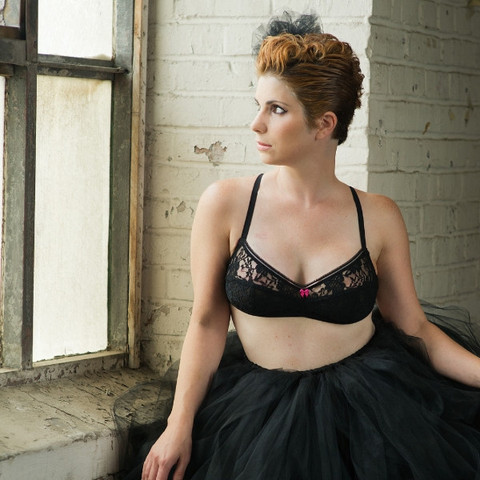
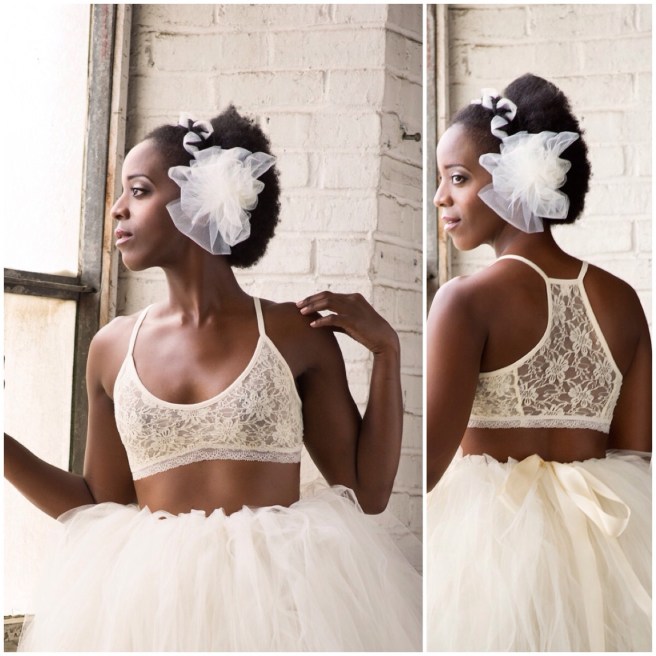
Last week, the same day I returned that white top to the rack, I came across AnaOno Intimates in an article I found on twitter.  It’s a small company started by Dana Donofree, a young breast cancer survivor who was frustrated when her plastic surgeon suggested she just wear sports bras after she’d finished her reconstructive surgeries.  Trained at Savannah College of Art and Design and having worked in the fashion industry, Dana decided to take matters into her own hands, and AnaOno Intimates was born to meet the needs of women who had gone through various surgeries for breast cancer.  I immediately headed to her website which featured bras that actually look like bras and read her promise that they would really fit me.  I was oh-so hopeful, but after trying on what had to be at least a hundred bras, I worried the small/medium/large sizing wouldn’t work for me.  I filled out the contact form expressing my concerns, and almost immediately had an email back from Dana.  She asked for my dress size and the volume of my implants and then confidently pronounced me a medium.  She could tell me the sizes of the models and even other women she’d fitted, complete with details about the volume of their implants.  I could tell she knew what she was doing, and so I was giddy as I waited for my package to arrive.  I am now the proud owner of the first two bras shown here– the Alejandra (shown in black) and the Rachel (shown in ivory). The Rachel had been my first choice, I eagerly donned it as soon as I opened the package and wore it all day– I haven’t worn a bra all day without being completely irritated since my mastectomy.  But I just love the Alejandra– it fits like a dream and reminds me of the pretty push up bras that I used to wear what seems like another lifetime ago.  (Don’t let the website fool you, I almost missed the fact that the Alejandra has convertible straps– they can be worn criss crossed as shown or like a standard bra, which I prefer.)

anaono mastectomy reconstruction bra jill jennifer

The site also features several bras that I consider sportier– still very pretty but reminiscent of a racerback sports bra.  They’re not likely to be my go-to, but for women who have had a lumpectomy or a mastectomy without reconstruction, these bras are genius. The light stretchy fabric and racerback shape makes them a great fit even when there is a substantial size difference between breasts.

anaono mastectomy reconstruction bra kelly 3

I have to admit that the ability to go without a bra is a pretty big perk (couldn’t resist the pun!) most days, but I found the inability to find a decent bra surprising and such a disappointment. I guess for as much as most women complain about it, there is something so inherently feminine about wearing a pretty bra, and I didn’t like that the option had been taken away from me. I’m so glad that now when I want to wear a pretty bra– or even just a plain white tee– I can head confidently to my lingerie drawer, knowing that I have some lovely options.

I know October is almost over, but through the end of the month, you can save 10% on your purchase at AnaOno by entering the code WARRIOR10.

Post Chemo Pixie Grow Out | Nineteen Months and Counting

image

So we are now approaching nineteen months after my last chemo.  I’ve just had another haircut, and Dragan warned me that I’m getting to a difficult stage.  “But you’re doing a great job faking it,” he reassured me. We talked about the growing out process.  He conceded that I could have just let it grow instead of coming to him faithfully every five or six weeks.  That may have been a little quicker to shoulder length, but I know I’d have hated every minute of it.  This way, I’ve had a lot of different hairstyles, but they’ve all looked intentional.  Intentional.  That one word makes a world of difference to me.  As soon as it was long enough to get cut, I never again looked like a cancer patient growing out her hair, I looked like a woman who had chosen to have a short hair cut.  (Of course, I only looked like I had made the choice, in reality, it had been made for me.)  Dragan’s encouraged me to really play with my hair and see what I can do– see how I like it.  The bottom two pics are my normal looks– more rock and roll on the left and smooth, tucked behind the ears weather girl style on the right.  I tried out the rocker style last week when I was headed into Turner’s classroom, and upon my entry, he loudly exclaimed, “It looks like you have bed head!” Um, mommy’s trying something new, sweetie.  Thanks for noticing.

I was chatting with a short-haired friend who lamented at how long my hair is getting– she really loved it short.  I told her I was growing it out, mostly for my family.  As we chatted, I had to admit that pre-cancer, I would have considered Clay’s opinion of my hair but would have likened letting the kids have a say in my hairstyle to letting them eat cookies for breakfast.  Sure, sometimes they want something, but kids don’t always make the best decisions.  I’m the adult.  It’s really only because of the cancer that I’m making that concession.  I want to be able to give them the “normal” they remember– the wife and mom with long flowing locks who didn’t have cancer.  Of course, it will be years before I have those same long locks, and by then I’ll be over forty and probably due  for the “I’m getting to old for this” chopping of the hair.  But it wasn’t until this weekend that it dawned on me– I’ll grow it as long as I can, but the next time I end up with a pixie or a faux-hawk, it will be my choice– not a necessity brought on by cancer.  And somehow, I think that small distinction will make all the difference.