Navigating the Challenges of Cancer | A Video Series with ASCO

image

Back in December, when my hair was short and Emma Clare was in the throes of Christmas Drama drama, I had the opportunity to spend an afternoon at ASCO recording an interview that would be used as part of their “Navigating Challenges” video series.  The American Society of Clinical Oncology (ASCO) is the professional organization for oncologists– they publish an academic journal, organize several conferences for oncologists to meet and discuss research, and they serve as a resource for oncologists across the country and around the world.  They also sponsor and maintain the Cancer.net website– a reputable resource for cancer patients and caregivers.

I spoke a couple of times in two different videos: Making Decisions about Your Cancer Treatment and Finding Emotional Support after a Cancer Diagnosis. They are a compilation of interviews with oncologists and cancer survivors.  In all honesty, loyal readers probably won’t hear anything new from me, most of the topics I’ve already discussed here. I talked about the importance of limiting internet research to only the most reputable sources.  I reminded patients and caregivers that it’s important to accept help when they need it, and that there is value in sharing experiences and stories with others going through the same things.

I’d like to think that someone who has just been diagnosed with cancer might watch these videos and learn something that will make the process a little easier.  I learned something, too.  I learned that I move my head a lot when I talk, I look up and to the left when I’m thinking, and I really love my hair that short!   (I may have to work on at least a couple of those…)  And while I can’t say that I didn’t already know it, trying to get a screen grab to post here showed me yet again what Sally knows all too well– I blink a lot!

It was a privilege to be part of a project with such a big potential impact.  This series, Navigating Challenges after a Cancer Diagnosis, was possible because of the generosity of the Livestrong Foundation and the Conquer Cancer Foundation.

image

Talking Nipple Tattoos after Breast Cancer on Let’s Talk Live

LTL6

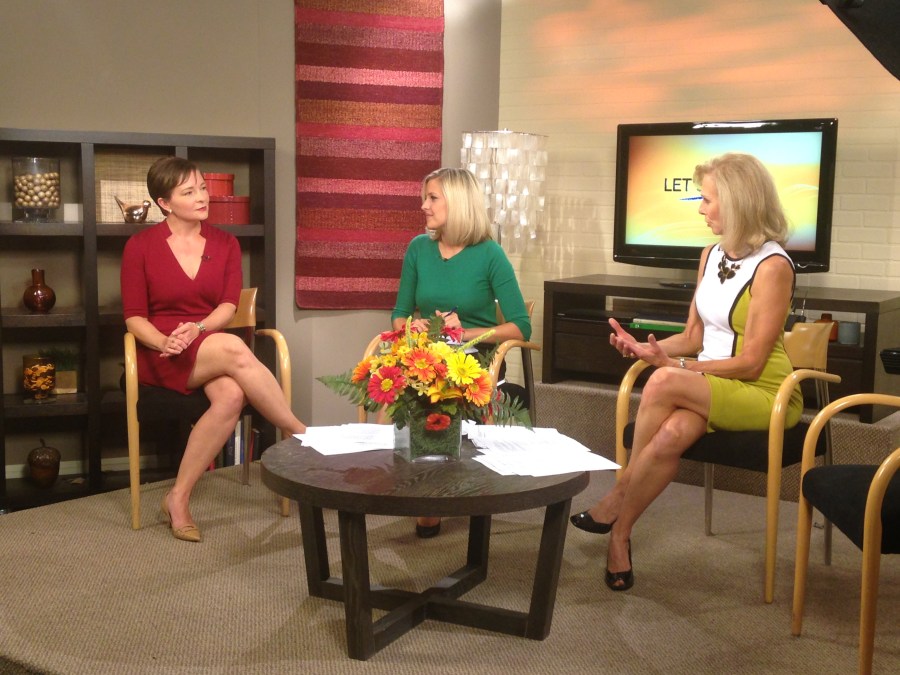
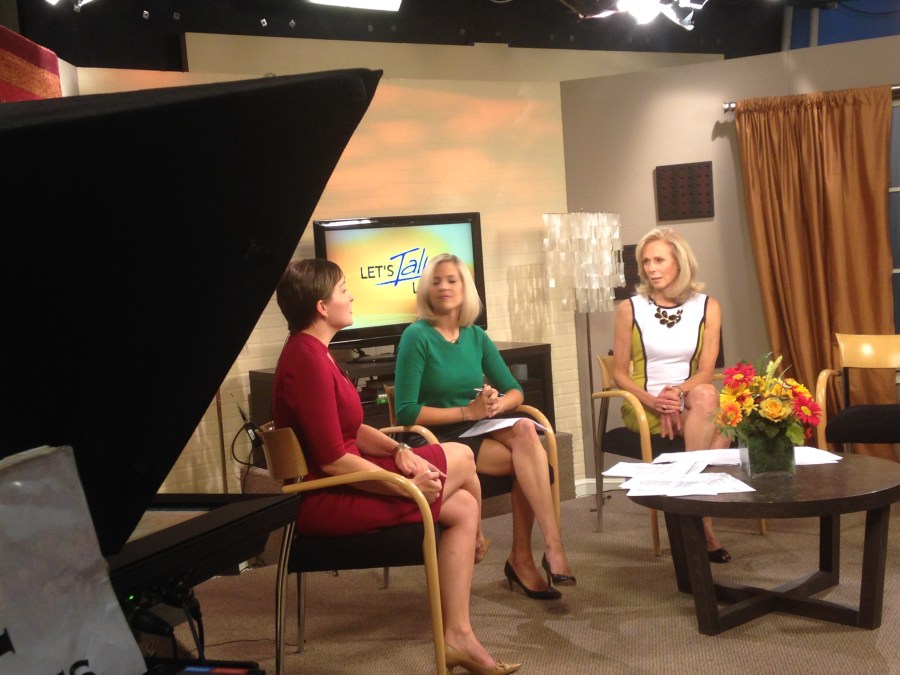
This morning I had the pleasure of chatting with Melanie and Rachel on the set of Let’s Talk Live about my experience at Little Vinnie’s Tattoo shop. Definitely a delicate subject, but in the past few months, I have been surprised by how many women who have gone through the many steps of reconstruction following breast cancer are unaware of their options for nipple tattooing.

LTL2

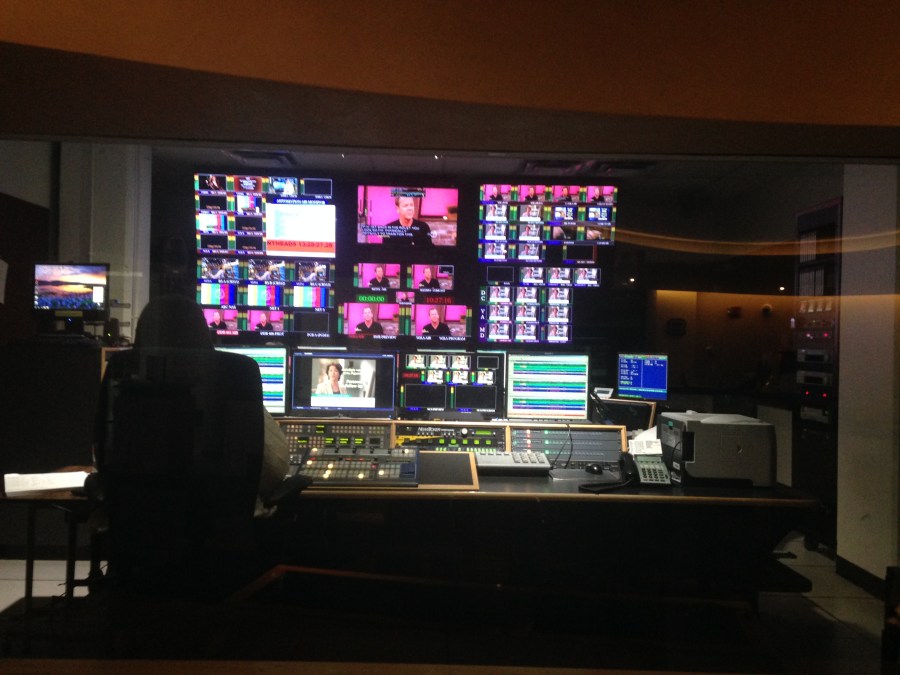
I have to confess being a little starstruck by all the behind the scenes views…

LTL3

LTL7

I also have to confess about being a little nervous– I’m happy to talk to people about just about anything, but this is TV. In the internet age. One blunder can live on forever.  I talked to a friend who is a news producer, and was so thankful for her advice and encouragement. She told me not to over-prepare, just to treat it like a conversation with a friend.  I mostly tried to think of things people might want to know and make sure that I had an idea of what I might say.

LTL5

The only place I came up blank was on the “why” question.  Why would I want to talk about nipples on TV? Why do I blog at all? I’m not really interested in my fifteen minutes of fame, though I guess all the nipple talk could get me that.  As always, needing to write something in this blog (or, in this case, say it on TV) helped me realize something for myself. Thanks to my education, I had an uncommon confidence in my diagnosis and treatment. For the most part, I knew what to expect, and that made it so much less scary. Years ago, in graduate school, when I thought I would like to help educate patients, caregivers, and advocates, I was focused more on education for the sake of knowledge.  Now with the understanding of a patient, I want to educate for the sake of the patient– I want to help other women find the confidence I had.

LTL1.JPG

If you didn’t catch the interview live, never fear, it lives online for all to see.  And if you’re looking for someone to talk about her fake nipples to your elementary school assembly or church group, get in touch and my people* will get back to you.  Because I’m sure that talking about nipples in public is a highly marketable skill.

*And when I say “my people” will get back to you, I totally mean me.  If I had people, they would clean my bathroom and I would still answer my own emails.

Stay Tuned | Run Lipstick Chemo on Let’s Talk Live

IMG_1637-0

Big news, loyal, local readers! Come Monday morning, I’m totally going to be a huge celebrity. If you want to chat or have coffee, now’s the time.  I’m sure my phone’s gonna be blowin’ up by Monday afternoon.

OK, probably not.  But Monday morning, I am going to be a guest on Let’s Talk Live on NewsChannel 8, discussing  my trip to Vinnie’s Tattoo Shop and nipple and areola tattoing after breast reconstruction. (Yes, I am going to be on TV.  Talking about nipples. What a debut!)  If you have any last minute thoughts/comments/questions on the topic, let me know, and they may make it into the segment.  And if you’re local, tune in Monday morning at 11am.  (If you’re not local, I’ll be sure to post a link so you can watch the segment online.)

So tune in Monday, and check back here next week for a link to the segment and maybe a fun recap!

Chemo: Before or After Surgery | Neoadjuvant Chemotherapy

chemo-103

It seems like I’ve been revisiting that morning in the surgeon’s office a lot lately.  After we talked about the fact that I felt pretty sure I wanted a double mastectomy, my surgeon confirmed the other thing I’d been thinking– that I would need chemo. My oncologist would talk to me about the specific drugs I needed, but my surgeon told me that I would have the option of doing chemo before or after surgery.  Again, she advised me that neither option had been shown to increase overall survival.  Again, almost instinctively, I told her that I wanted neoadjuvant chemo– chemo before my surgery.

It’s not uncommon to have the opposite reaction. Many women have a “get it out” kind of reaction and want surgery as soon as possible. But I knew that the only reason a patient receives chemotherapy is if there is a chance that even one teeny cancer cell has escaped past the original (removable) tumor. I couldn’t handle the thought that even one little cell was setting up shop somewhere else, growing and spreading even more while my body was healing from surgery.  I didn’t want to wait a few weeks for surgery and then at least six more weeks to heal before I could start chemo.  My oncologist agreed that was a reasonable conclusion, but also pointed out that she liked the fact that it would enable her to watch how my tumor responded to the chemotherapy in vivo— that is, in living tissue.  (Discovering I was a scientist early in our first meeting, I wonder if she knew how much the words in vivo would mean to me as a scientist? In vitro studies– cells in a dish– are crucial to the research process, but artifacts come along with the artificial environment, in vivo studies have so much more validity.) With breast cancer, tumor dormancy is always a big fear– that there are some cancer cells that can somehow evade chemo and sit dormant for years before they begin to grow again and cause distant metastases that can take a patient’s life. We know, in general, that triple negative breast cancer responds well to the chemo regimen I would be taking. But if I had neoadjuvant chemo, we would get to see how MY triple negative tumor responded.   My oncologist and I agreed, if even one cell of viable cancer made it through chemo, I would do another chemo regimen after surgery.  If that one cell could survive, maybe another one, one that managed to escape my breast, survived, too.  Being able to see how my actual cancer cells responded to the drugs gave my medical team such valuable information.  The only thing the pathologist could find in the breast tissue removed was some scarring– he could see where the tumor had died.  Every last cell was dead.  Of course, there are never any guarantees, but a pathological complete response after neoadjuvant  chemo is the best scenario I could have imagined after hearing the words, “You have cancer.”  If I would have had surgery first, and then chemo, it’s likely that the chemo would have been just as effective.  But with the original tumor removed, I wouldn’t have the confidence that the words “pathological complete response” have given me.  It’s always good to be in a good place, but it’s so much better to know that you’re in a good place, so that you can truly appreciate it.

Pixie Grow Out Update

hair collage

Last week I saw a couple of women I hadn’t seen since the end of April.  They were shocked by “how long” my hair had gotten.  The kids have noticed, too, and Emma Clare thought that she should style it.  It started as one little sprout of a ponytail, but once she saw how easily she could put it up, my head was quickly covered with little sprouts.

20140803-214213-78133756.jpg
It is getting long, though.  And it’s getting hard to control.  I wanted to share a picture with a real hairstyle, but I don’t seem to be happy enough with it for more than ten minutes after styling it. Thankfully I’m heading to get a haircut this week, maybe Dragan can come up with something to control these locks a little better than what I came up with on Saturday! (I’ll try to have a post-haircut pic up next week!)

Single vs. Double | Contralateral Prophylactic Mastectomy (CPM)

When my surgeon told me that I had triple negative breast cancer, she indicated that because of the aggressiveness of my disease, but mostly because of the size and location of my tumor, I would probably need a mastectomy on that side.  (A lumpectomy would have left me far too disfigured to be easily corrected by a plastic surgeon.) The words were hardly out of her mouth before I asked if a double mastectomy would be an overreaction.  She assured me that it wasn’t an overreaction, though a contralateral prophylactic mastectomy– a mastectomy of the other side to prevent breast cancer– was not shown to increase my overall survival. (If I were to have had a BRCA mutation like Angelina Jolie, however, this would not have been the case. The genetic mutation in those ladies makes their risk of a new cancer in the other breast very high.)

I heard her words– it was a major surgery not without risk, and it would not make me live any longer.  I understand survival numbers and statistical significance, I know how to make evidence based decisions.  Yet the decision that I made was not evidence based. I would think just realizing that would upset me, but I know that I didn’t make an uninformed or hasty decision.

A recent publication in the Journal of the National Cancer Institute reiterates a lack of survival benefit associated with contralateral prohpylactic mastectomy (CPM), blaming a perceived benefit as the reason CPM rates have increased substantially– that women don’t understand they won’t live longer and so choose CPM. This has sparked a lot of discussion, both in the scientific community and mainstream media.  How could an intelligent woman understand that it won’t lengthen her life and still choose to have a healthy breast removed?

I remember laying on the procedure table, waiting for the bleeding to stop after my second biopsy (it turned out to be a rather bloody affair) and talking to my surgeon about my future surgery.  She told me that a CPM wouldn’t increase my survival. She may have even asked why I wanted to have a double mastectomy.  At that point, I hadn’t done any research, looked at any pictures, even really discussed it with anyone. Almost instinctively, I told her that if I were to survive this cancer, I still had a lot of years left to live.  I didn’t want to spend those years worrying about my “healthy” breast– the mammograms, the MRIs, the anxiety.  Reconstruction after a single mastectomy usually includes some sort of lift and possible augmentation on the healthy side to match the reconstructed side, but I knew that I’d likely be happier with the cosmetic results from a double mastectomy, too. She assured me that those were valid concerns, but I had plenty of time to think and consider my options.  Choosing CPM is not without a downside.  Mainly, the loss of sensation is a big deal.  I still have some nerve issues in my healthy breast that causes me a fair bit of irritation (think of that tingly feeling when your foot is just starting to fall asleep) when I wear a seatbelt or a bra.  Good thing my reconstructed breasts don’t require one of those pesky things!

With all the talk about this study, I have caught myself wondering if I made the right choice. Would I have been happier to still have one natural breast? It turns out that sometimes even a scientist has to abandon evidence based decision making.  I used more emotion than data in choosing my surgery, but I am convinced that I made the right decision for me.   I know it won’t get me any more days at the pool with my kiddos, but I like knowing that those pool days will be free of worry about an upcoming mammogram or the self-consciousness that my breasts don’t match.  We women have enough to worry about in a bathing suit as it is!

CPM isn’t the right decision for all women, and in fact, may not be the decision I’d make if I’d been diagnosed in my seventies instead of my thirties. There may be women who don’t fully understand the survival benefit (or lack thereof) of CPM, but I don’t think that it’s fair to suggest that all women choosing that option were ill-informed or made an “almost primal” decision to offer up a healthy breast as some sort of maternal sacrifice for our family.  While I know that it did not increase the length of my life,  I feel certain that my choice of CPM drastically increased the quality of my life.

Make New Friends or Just Keep the Old? | Breast Cancer Support Groups

After I was diagnosed with breast cancer, I had a huge stack of papers and pamphlets: places to go, options to consider.  My oncologist, in particular, encouraged me to join some sort of support group.  There was one that fit me perfectly– breast cancer patients with young kids, of course the pamphlet was printed on pink paper.  In retrospect, I’m not really sure why I went.  I didn’t feel like I needed any emotional support. I suppose I went because I had put it on my to-do list, and so I needed to check it off. While I was going through chemo, I generally went if I hadn’t skipped a nap that week and I didn’t have anything more fun to do.  Honestly, I didn’t feel like I got that much out of it.  I think I found it more interesting from an intellectual perspective than anything else.

I didn’t go over the summer last year– it’s tough to make even a monthly meeting over the summer with travel and kids at home.  I figured I’d go back in the fall.  If I didn’t have anything better to do.

And then a friend had a recurrence.  She’d hung out with me while I was on chemo, told me what to expect with surgery, even shown me her scars and compression gear after her final surgery.  Last fall, I was faced with the reality that my candid, funny friend could die from breast cancer.

We have the same oncologist, and she knows that we are friends.  Of course, she wouldn’t talk about my friend at my appointment, but she cautioned me that I would know “people” who had recurrences.  That meant nothing about my chances of recurrence.  She felt very optimistic about my case, and she warned me about getting too close with women with breast cancer. She knows my background and that I want to be able to use it and my experiences to help other women with cancer.  She shared with me her own struggle maintaining a professional relationship with patients when she genuinely likes them– that it is hard for her to see them die.  But that she has to have some separation.  She shared all this with me in such a genuine way– out of concern, almost as a friend. As I worried about my friend (who is on a trial and doing great, by the way), I stayed away from the support group.  Why would I want to make any more friends who are likely to die? More than that, why in the world would I want to spend time with someone who will remind me not only of my own mortality, but of the fact that I could die slowly, in pain, with my little kids looking on? I didn’t feel like I needed the group or anymore baggage, so I made up excuses not to go. Not that I gave those excuses to anyone– they never knew that I went to begin with.  I gave the excuses to myself, knowing full well that I was telling myself lies.

As I approached my six month check up appointment in the spring, I started to worry. I worried about every little headache, an achy hip, a teeny little “nodule” in my breast. Intellectually, I knew I was probably fine.  But the “what ifs” began to take over my thoughts. I felt so silly calling my doctors. I was embarrassed to bother them. (Thankfully, Clay told me that he didn’t want me to feel bad bothering them, but that he would feel better if I’d check it out. It became less about me bothering them for me, more about doing it because he wanted me to.  And somehow that made it better.)  About that time, I discovered the BCSM group on twitter and found many of them talking about “scanxiety–” the anxiety that comes as you approach a scan or doctor’s appointment.  They talked about not wanting to bother their doctors with their fears of recurrence.

I found comfort in the validation. I hated that anyone else felt like I did.  Yet it was comforting to know that someone else felt just like I did.  I headed back to support group that month.  I sat in the room of women, some a couple of years out from treatment, one past the coveted five year mark, and one who was taking a break in the middle of her chemo treatment.  Because she was giving birth the next day.  I learned two major things that day. No matter what crazy things I worry about, other people worry about them too. Also, I should stop feeling sorry for myself because someone always has it worse.  I may have some things figured out when I walk in the door, and perhaps my words could help someone else.  And because she’s already been through something I’m struggling with, her words can help me.

And so I will go to support group, and I will make new “cancer friends.” Desperately, I hope that we will all stay healthy and cancer free and die as sweet old ladies. Yet I know that I may not have gone to the last funeral celebrating the life of a woman whose life was claimed by breast cancer far too young. Even so, I am convinced that we can gain more through the sharing of our stories than the pain of loss can take away.

Good Intentions Unrealized | The Dangers of the Quest for Perfection

In the last week or so, it seems that I’ve read several posts tackling the subject of good versus perfect.  Posts discussing whether one should be happy with “good enough,” post suggesting that perfection is the enemy of the good.  I would never profess to being a perfectionist.  I will never have the perfect house, the perfect hair, or perfect children, and I am fine with that.  Yet, I find myself with good ideas and good intentions that are put off waiting for everything to be “just right.”  I want to send a note to someone to let them know that I’m thinking about them, but I can’t seem to find the right words.  I’d love to have someone over for dinner, but I worry that it will be one of those nights where something comes up and Clay has to stay at the office later than he intends. I want to get a gift for someone, but I can’t find just the thing that shows them how special they are to me.  And so I put it off so long that the good intention is forgotten, the good deed remains undone, the special people remain untouched.

The same principle applies to our health.  It’s so easy to put off scheduling a routine appointment waiting for the “perfect time.”  (Spoiler alert: there is never a perfect time for anything!) Whenever I can, I try to schedule next year’s checkup as I check out from this year’s appointment.  My mind works the same way for more acute issues, too.  I lose a lot of momentum as time passes. A lump is a lot more scary the first time my finger runs across it. While I’m busy trying to find the “right time” to make an appointment, I begin to convince myself that it was always there or isn’t really that big of a deal.

I know in my heart that it doesn’t make sense to wait for the time to be just right, for my house to be perfectly clean.  Yet my actions don’t always show that.  And so my challenge to myself is to act when my momentum is high.  If I think I should write a note, I should sit down and write it right then.  When it crosses my mind to schedule an appointment, I need to just do it.  If I can’t work it out, I can always change it. I need to stop letting my quest for perfection, even if it’s a subconscious quest, ruin all the good things that I could be doing.

Routine Appointments, Compliments, and Icky Words

last day of school
The kids and their puppy on their last day of school.

I had my annual OB/GYN exam last month in the flurry of  “appointments before school gets out.”  I really like my doctor, he was there when I went in to labor with Emma Clare, and he delivered Turner. He has the greatest bedside manner.  He’s a runner, so we’ve talked barefoot running versus cushiony shoes.  He was the first one to hear I had breast cancer– my surgeon found out when she was at a conference and was hoping that he could give me the news in person as he was seeing me that day. (Only I had already seen him when she called.) When I called his office a week later to see if I could get out of a routine post-op appointment to check that my teeny incision since I was immersed in cancer related doctor visits, he called me back right away. Of course I could skip the appointment, and he spoke to me with such compassion about my diagnosis, making sure I’d been able to secure all the appointments I needed and that I was in the care of the best physicians.

As she and I were trying to squeeze in one last “the kids are still in school” outing, I was telling Sally I had the appointment and called him my OB.  He was there when I had my babies, so that’s how I think of him.  She pointed out that I am not pregnant, nor do I plan to be, and so I should start calling  him my gyno. ??? Besides the fact that it makes me feel old, that is such an icky word. Gyno.  Ick.  And this from a woman who cringes every time I say the word “moist.” Not that I would ever say “moist” in her presence just for fun. And I would certainly never do it over and over again.

Anyway, this year when I headed into his office, he did the same exam as always, but he stopped when he got to the breast exam. “Wow,” he said. He asked about my plastic surgeon. “He did a really great job. I mean, I don’t want to be weird, but wow.” Kind of makes a gal feel good when a doctor who sees a lot of, uh, women in my situation, can be so complimentary.  (You didn’t think I was going to say “women in my situation,” did you?) He told me how happy it made him to see me looking so great– having come out on the other side of breast cancer so well.  I told him I might just need him to follow me around to say nice things.  And babies or not, I’m not calling him my gyno.

Surgery Wrap Up

The view from the exam table at my plastic surgeon's office
At the plastic surgeon’s office. Yep, that’s an implant on the sink. Because you know you want to touch it.

One week after surgery I headed back in for my post-op appointment. The one week appointment isn’t too eventful.  I won’t go through my whole outfit, but you need to be sure to dig out those good panties again.  Bonus points if you have two good pair, just in case the doctor remembers that you were wearing that same pair before.  And don’t forget, if you’re wearing spanx for compression, you need to toss those panties in your bag because you’ll have to ditch the spanx when you put on the paper gown so that the doc can check the liposuction incisions, and I’m betting that you’d rather not stand open-gowned to be examined– and have a full conversation– commando. (Which reminds me, I need to dig those panties back out of my purse so I don’t accidentally fling them out when I’m pulling out my wallet at Target…)

OK, now that we have the panties situation out of the way, on to the appointment.  My surgeon was pleased with the results so far.  The places he put the fat look much better.  He was very optimistic, though cautiously– but that’s just his character.  He’s a very conservative doctor, but he gets great results. He warned me that we can’t really judge until all the swelling goes down.  The six week appointment (the camera comes back out for that one, so all the panties and grooming talk applies again) will give us a very good idea, but he reserves all judgment for the three month follow up.  By that time, all the swelling and bruising should be completely gone.

And now for the big news: I still had good fat in my flanks! He was so sure that I wouldn’t, he made incisions in my abdomen and prepped it for liposuction before he started suctioning my legs. As it turns out, though, I’ve got some quality fat in my thighs. I’m so proud. He decided not to take any fat from my abdomen after all. Because he thought we should save it. In case I need it later. I wonder if anyone else has ever decided that they should save their fat for later?  I think he thought I’d be disappointed. But after three or four days above ninety degrees, my only thought was to ask whether I could ditch the super high waisted spanx. The prep work could leave me with some abdominal swelling, so he said I should stick it out for another week, but I’m thrilled to be able to switch to the low waist girdle in a few days. Plus, I got to keep my belly fat in case I need it later.  A win-win, right?