Race Report | Girls on the Run

photo 1

Almost two weeks ago, Emma Clare and I bundled up and headed back to the Girls on the Run 5K for the second year in a row. It was cold last year, but this year was seriously cold. Luckily, we ended up parking a lot closer to the starting area, so we stayed in the car for a long time, and we were able to get back to the car as soon as we’d finished running.  I was a little apprehensive about this year’s race. Of course, I’d been on chemo last year, but I’d been running faithfully, and was as prepared as I could be. No chemo this year, but I’ve not been doing a good job at running, so I was worried that I’d not do as well this year. How frustrated would I be to have done better while on chemo? Thankfully, despite the cold, we ran a good, strong race. My toes were numb and painful pretty much to the halfway point, but we managed to finish about three minutes faster than last year, and this year I was dragging Emma Clare along, instead of the other way around. I felt good, and I’m going to need that confidence as I start training for the Nike half!

photo 3

All the girls get a finisher’s medal, but we decided to forgo the photo at the finish line and instead snap one in the warmth of the car.  We also rode with a few friends this year, and that was such a special time getting to know them better. Between the poor preparation, the freezing cold, and the memories of insane traffic last year, I wasn’t too enthusiastic about heading to this race. But we had a good time, and I’m so glad to have had that special time with my big girl again this year.

On Not Having Cancer

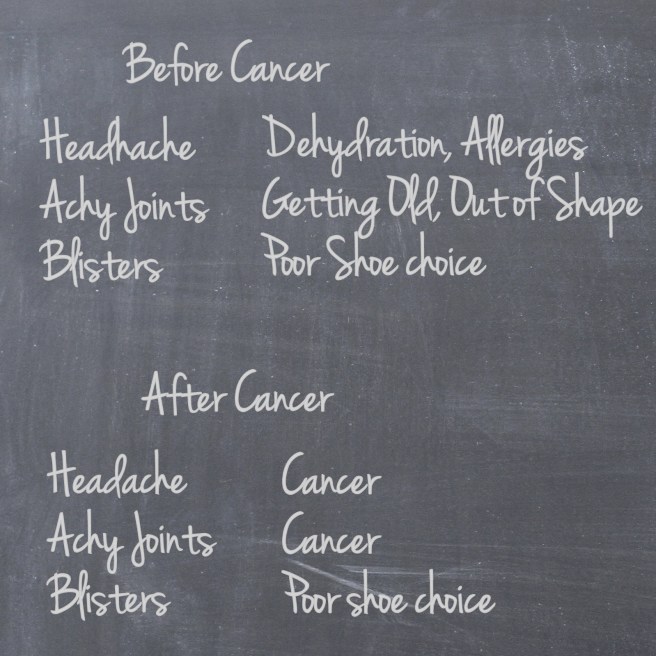
If you thought having cancer was hard, you should try not  having cancer. Before cancer, little ailments were just that.  Little.  Easy to explain.  During treatment, everything  was chemo’s fault.  After cancer, no matter how hard I try, one thought creeps back in…

before and after

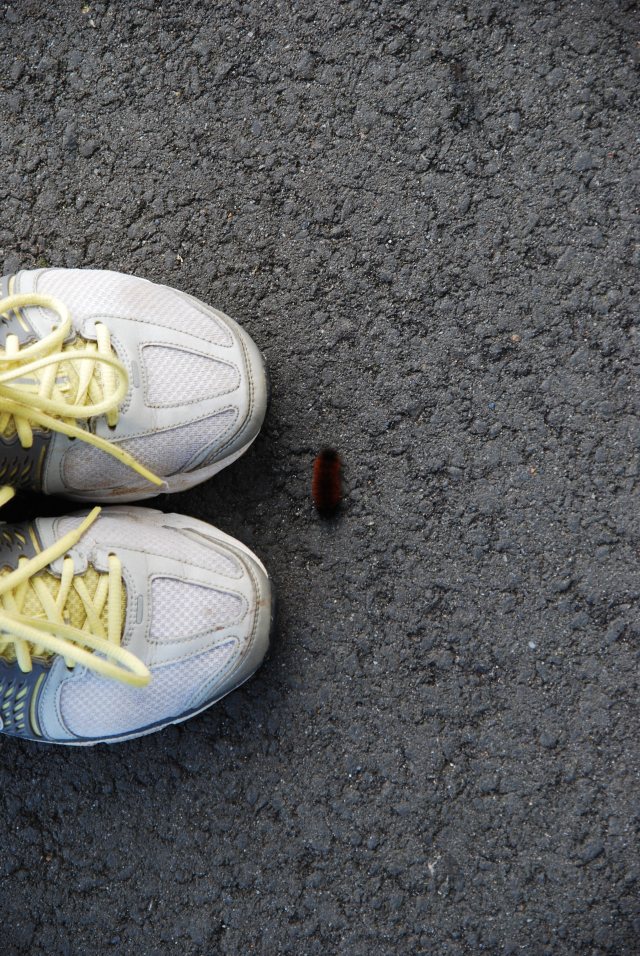
Don’t get me wrong, I don’t obsess over cancer coming back.  Thankfully, I’m far more logical than I am emotional. So every time cancer creeps into my mind, I can convince myself pretty quickly that normal is normal.  I have a wonderful oncologist who has made it very clear what constitutes “more than normal” and requires an office visit.  And I know that she will listen to any concern I bring to her, no matter how irrational, with the utmost compassion and professional courtesy. But I can’t say that I’m not looking forward to the day when I am confident that my headache is just PMS.  At least I know that the blisters on my toes are my own fault.

On Choosing a Plastic Surgeon

Those first two weeks after I was diagnosed with breast cancer, I went to a flurry of appointments.  There were quite a few diagnostic and follow up procedures, in addition to appointments with my surgeon, my new oncologist, and two different plastic surgeons.  At the time, I’m sure I would have downplayed the importance of choosing a plastic surgeon.  Perhaps my surgeon knew that, and that’s why she insisted that I meet with at least two before I settled on one.

I am certain that I made the right decision when I chose my surgeon.  I imagine if you’re searching out a plastic surgeon for botox or a tummy tuck, you’re either prepared to feel a little vain, or it’s just not something that you even worry about. But if you’re like most breast cancer patients, it can be a little awkward to go into a doctor’s office asking lots of questions about how great you’ll look after he does his job.  I mean, you just want to survive the cancer, right? It shouldn’t matter if you come out on the other side with a great rack.

This is just one place I think my surgeon was great.  He made it very clear from the beginning that he does lots reconstructive surgeries (a must!) and wanted to be sure that I thought I looked good, period, not just good enough  for having had breast cancer.  He showed me pictures of women who had made all different choices– you might be surprised all the choices someone in this position actually has.  Bilateral mastectomy, or single with a lift on the healthy side to maintain symmetry?  Nipple sparing, nipple reconstruction, 3d tattoo? Stay the same size or go bigger?  He was at the same time realistic and optimistic about my outcome.  Not only did he want me to be happy with how I looked, but he wanted to be sure that  he  was happy– that I looked natural and not like some over-done Hollywood B-lister.  Since there is no fat or breast tissue left after a mastectomy, implants alone can end up looking pretty fake, so he uses fat grafting to fill in around the implant.  This means that during the surgery I had liposuction (not enough to really make a difference, though, don’t get excited) and he injected that fat around the implant, giving a much more natural look. He was also very thoughtful about the incisions, making sure that my scars won’t be visible should I wear even a pretty skimpy bikini top.

Being able to talk easily and honestly is so important, this is a doctor who I saw several times a month.  He not only made sure that he answered my questions, but always remembered the name of my husband or what ever friend came along with me, and called them by name when asking if they had any questions. We talked about lots, and as we neared the end of my expansion, I remember him asking if I’d tried on some of my dresses to see if I liked the way they looked, or if we needed to expand a little more.  He managed to find a way to let me tell him what I wanted without forcing me to outright ask for bigger boobs.  And after the final surgery, he honestly wanted to know what I thought, to be sure I happy with the size and symmetry.

Sure, these aren’t the life and death decisions that the oncologist makes.  But when you’re considering a doctor with whom you have to be painfully honest in some painfully vulnerable situations, and who is in control of how you feel about yourself every time you look into the mirror, it’s worth taking the time to make a good decision.

Pixies by Choice

redlipstick-102
A few days following my most recent haircut wearing Russian Red lipstick by MAC

charlize          michelle williams

beyonce 2                   pam anderson

jlaw

Charlize Theron was one of the first celebs with whom I related when my hair was growing back in.  I still love her hair in that first picture– she is so beautiful, and her hair just looks perfect to me.  And of course, Michelle Williams has been sporting her pixie ‘do long enough to be one of the first images that pops up when you google it.  Beyonce chopped off all her hair this summer, but I have to admit being a little disappointed when she was photographed in a long wig just a few days later.  And just this week, Pamela Anderson ditched the long locks that have been a major part of her identity for decades, and Jennifer Lawrence followed suit.

It’s probably easier to keep up with a pixie hair cut when frequent haircuts are de rigueur and a stylist follows you around with an armload of product, ready any time a hair goes awry.  And of course, when they’re ready to grow it out again, they’ll have the support of that same fabulous stylist, helping them make the best of a hard hair situation.  I’m so glad that I have Dragan by my side, helping me as I try to grow mine out.  I love it short, but I loved it long, too, so we’re going to see if I can stand to let it grow.  But at least I know that I’m in the very best hands, or scissors, to make the growing out process as painless as possible.

photos: Charlize Theron/Michelle Williams/Beyonce/Pamela Anderson/Jennifer Lawrence

Missing Cancer | Scarves

covet14-100

A couple of weeks ago, Sally and I were at one of our favorite shops, Covet Boutique in Arlington, getting ready for a party we’re helping host this weekend.  I saw this scarf on a display and loved it.  I was so disappointed that Autumn, the shop owner, hadn’t found these last year.  Even though I’ve got hair now, I couldn’t resist tying it on my head, wishing I’d had it a year ago.  I love everything about this scarf– the soft, knit jersey, the red color, the chevron pattern, the long tail, the contrast of turquoise and navy.  As I recall, there was another print or two of these soft, knit scarves, but I can’t even remember what they look like, this was so clearly my favorite.  It almost makes me miss the bald head that required a scarf. (And if you happen to be local and would like to join us this Saturday afternoon, you can check out this scarf and the rest of our favorite gift shop– details here.)

This post is part of a series of what I’ll miss from my time as a cancer patient.  I know cancer is a serious thing, not everyone tolerates treatment well, and not everyone recovers.  I don’t mean to offend by making light of a serious subject.  These posts are just a glimpse of my efforts to make the best of my situation—to find the silver linings wherever I can.

Follow Up

follow up

Last March a week or so after my mastectomy, I had an appointment with my oncologist.  While I’d already heard from the surgeon’s office that I’d had a complete pathological response, this appointment had been set up to completely discuss my pathology and any next steps.  Because of the good pathology news, the “next steps” part was very short.  Come back every six months for a quick physical exam and a chat with her.  And that is all.

I love my oncologist, and I respect her on top of that.  But I questioned this advice.  Nothing? No scans, no blood tests, nothing?  Knowing my research background, she reassured me what I suppose I already knew deep down.  I don’t have any breast tissue left to mammogram.  There are no biomarkers associated with breast cancer that can be measured from a blood test.  And even PET/CT scans aren’t indicated in an asymptomatic patient.  She told me that the Journal of Clinical Oncology had recently published a study on this very topic.  So we discussed that I’d be back in six months, and the situations under which I should call her earlier, and I hugged her and left.  I was a little surprised to see an email from her in my inbox later that afternoon, with this article.  She’d found the article published that very month, and sent it to me to reassure me just a little bit more.  And when I admitted to being a bit of a nerd, but told her I appreciated her taking the time to send it to me, she replied simply.  “nerds are cool :)”

More Questions | Mammograms

show-2
source

First a disclaimer: I’m not a medical doctor. This blog is full of personal anecdotes and sometimes a scientific perspective.  So, there’s that.

The American Cancer Society encourages women to start annual mammograms at age 40. (A newly-Canadian friend asked about this, and I believe their recommendations are a bit different.)  Because of that recommendation, insurance companies are required to cover this level of screening. Doing a little research for this post, though, I found that in 2009, the US Preventative Services Task Force actually changed that recommendation to start biennial (every two years) mammograms at age 50, but I’m guessing that because of previous legislation, insurance companies still cover yearly mammograms after 40, and so doctors still suggest it.  (Not only am I not a medical doctor, I’m not a politician, so if I’m wrong, please forgive me.) If a woman is at particularly high risk, earlier screening may be warranted.  In general if your parent were diagnosed with a  (screen-able) cancer at a young age, you should start screening when you are ten years younger than your parent was at diagnosis.  So that means based on current standards, my beautiful little girl will need to start some breast cancer screening when she’s only 25.  That really breaks my heart.

Even for women with reasonably normal risk, though, mammography is not without controversy.  There is a growing voice speaking out against screening mammography, citing data indicating while it has increased the instance of diagnosed breast cancers, it has not drastically decreased the number of breast tumors presenting at a late stage, nor has it made a significant decrease in overall mortality.  (Edited to add: a new study refutes this, indicating that mammograms really are catching tumors earlier.  Read my update to the great mammogram debate here.)  And they suggest that the number of unnecessary biopsies is not acceptable.  Now, I’ve had a diagnostic mammogram, which is like a screening mammogram on steroids.  Yes, it hurt.  But for a few seconds a few different times.  And I’ve had a few biopsies.  One of them was particularly bad– I bled a lot.  My chest was wrapped so tightly when I left that I couldn’t fully inflate my lungs, and the surgeon called me first thing the next morning because she was so worried that I might start bleeding and require emergency surgery. That was a bad biopsy. Still, I’d rather have a bad biopsy and find out that I didn’t have cancer than let cancer go undiagnosed for years.  That’s all emotional, of course.  I’m so glad I’m not the one who has to really examine the data and look at cost benefit analysis to make official recommendations and decide on insurance coverage.  But my semi-emotional, semi-rational response?  Get your mammogram for as long as your insurance covers it.

On the other side of the issue, there are people who wonder why mammograms are only covered for women over 40.  I mean, I got cancer before I was 40.  Breast cancer is still predominantly a disease of older women, and yet that doesn’t mean that young women go unaffected.  But part of the reason that younger women don’t get mammograms has to do with their biology.  Younger women have denser breasts– more breast tissue and less fatty tissue– and mammograms can’t visualize a dense breast nearly as well as a fattier breast.  So a screening test that’s not as effective in a population that’s at a much lower risk? Not recommended.  For young women at particularly high risk, those with a mutated BRCA gene, for example, an MRI can often be more informative and so is more likely to be covered by insurance.

I don’t think any woman can say the word, “mammogram,” without cringing just a little.  But one very important thing I’ve learned in the last year is that it’s SO much better to find a tumor sooner than later.

You Asked: Lymphedema and Cording

So I’m taking a small liberty here, no one asked about cording, but it feels like it’s worth mentioning along with my comments on lymphedema.  To determine the spread of breast cancer, breast surgeons remove one or more lymph nodes.  They act as filters, so they are likely the first place cancer cells would be trapped if they’d escaped the breast.  Unfortunately, taking them out to check for cancer, while important, can cause not so great side effects.  Lymphedema– the swelling of fingers and arms in breast cancer– occurs when the remaining lymph nodes can’t keep up and fluid builds up.  That’s why some women wear a compression sleeve after a mastectomy. Because some of the lymph nodes are removed, the lymphatic vessels that service those nodes can harden from disuse and cause problems as well. (They look like tendons that appeared out of nowhere, frequently under the arm and down the arm to the wrist, but can also run from under the arm and down through the chest.)

Before I had my mastectomy, I had an hour or so consult with a physical therapist.  (As an aside, I would insist on having this kind of appointment a week or so before surgery– invaluable.) Michelle is a lymphedema specialist, and she made sure I understand exactly what I should and should not do after surgery.  More than that, she made sure I knew what to expect and what would signal a problem with lymphedema.  She emphasized that it would be far easier to deal with lymphedema early, before it became a significant issue.  Though I have yet to meet her, I also have several friends who see a massage therapist at the Teal Center at the hospital who focuses her massage on the axilla (that’s a fancy word for armpit– I’m flashing back to Fancy Nancy!) to help encourage lymph drainage.

Thankfully, I only had a few small, superficial nodes removed at surgery, so I am not likely to struggle with lymphedema. I did experience some minor cording, and Michelle used massage and stretching to break the cord, which you could hear pop as she broke them down.  Creepy.  On the advice of a friend, I scheduled my appointments with her just before I went for an expansion with the plastic surgeon, and I think the relaxing of that area really helped lessen the pain of the expansion.

Lymphedema and cording are real issues, though as current standard practice does not dictate that a surgeon remove all  nodes, they are not as prevalent now as they once were.  Still, the take home message is that there are physical therapists who are specifically trained to combat these problems.  Michelle did a great job, and she was really nice, too.  A little PT would be so much better than dealing with swelling and the pain from cording.

Writer’s Block

I have to confess I have a bit of writer’s block.  I can’t seem to think of a topic to get me started.  So that’s where you come in.  Any burning questions?  Something you’d like to know about implants, chemo, doctors?  I’m sure there are lots of things that I’ve forgotten to mention or skipped over because I thought they weren’t interesting.  I mentioned it before, but questions don’t bother me.  I promise, you’re more embarrassed to ask than I am to answer.

Come on, help a girl out.  Submit questions in the comments, or if you want to stay anonymous, just drop me an email.  Would love to hear what’s on your mind!

Running Towards “Normal”

Sally saw a post last week  and the photos alone gave her an idea.  So she gave me my very own photo challenge.  She suggested I bring along my camera on my first run after this last surgery.  She thought maybe I could document my run as I “get back to normal.” I love that she quickly added. “Ha.  Like normal is a thing.”

run lipstick chemo breast cancer

I agreed it would be a fun post, and so after lacing up my running shoes, I snapped a photo on the brick stairs at my front door, and I continued to snap away as we ran along the Potomac.

run lipstick chemo breast cancer

run lipstick chemo breast caner

run lipstick chemo breast caner

run lipstick chemo breast caner

run lipstick chemo breast caner

As I haven’t been on a run at all in six weeks, and I was only running half heartedly at best before that, I welcomed any stop to take photos.  So did this little lady, who was eager to pop out of the stroller at any opportunity.

run lipstick chemo breast cancerAnd of course, no fun run with Sally would be complete without the requisite stop at Starbucks.  So glad to be running and getting back to normal.  Like normal is even a thing.